
Black Unemployment moved up to 7.7%, a 20% Increase Since February of Last Year
BLS Unemployment Report
The Bureau of Labor Statistics(BLS) jobs report was bad. Really bad. Meanwhile, the BLS said the job market only “edged down.” That is some spin.
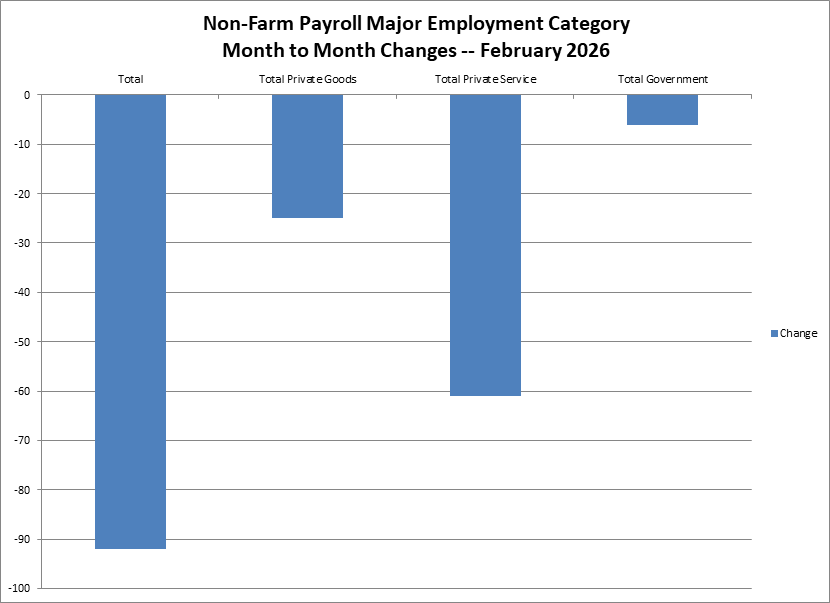
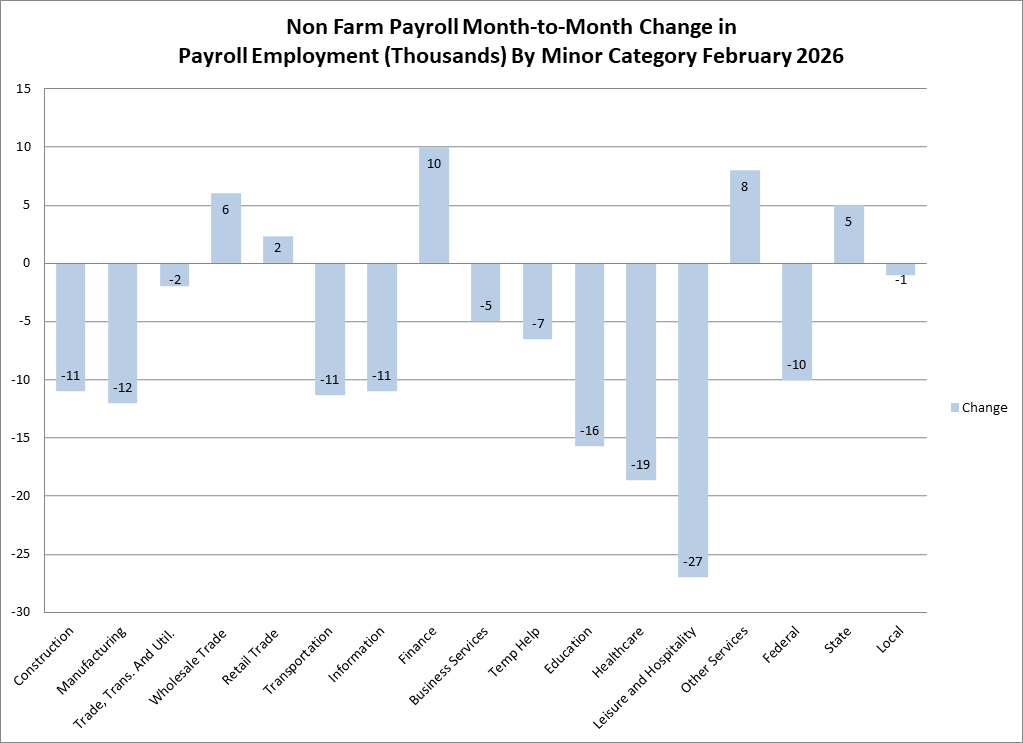
The BLS reported that businesses had a net loss of -92,000 jobs. It was the second-largest job loss since COVID in April of 2020. No significant industry had job growth except finance. Healthcare and hospitality were down for the first time since 2020, while manufacturing and business services also shed jobs. The household data showed an even larger drop, with -192,000 jobs lost between January and February.
The establishment data in the report comes from businesses and often has significant adjustments. The household data surveys individuals representing families.
The big story is no net job creation during the second Trump presidency starting in Jan 2025. We are in a new era of jobless growth.
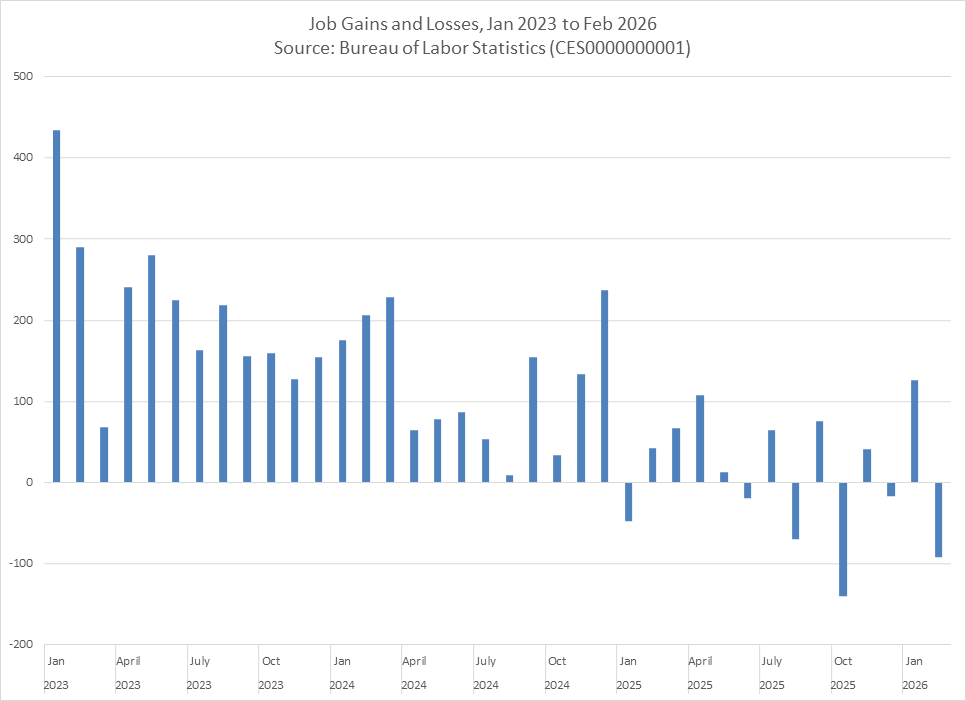
Between Jan 2023 and December 2024 (Biden), the economy added 3,975,000 or four million jobs. From Jan 2025 to February 2026(Trump), the job market has added only 150,000 net jobs. The US labor market has 158.5 million workers.
The general unemployment rate (U-3) stood at 4.4%, and the Black unemployment rate was reported at 7.7%. The white unemployment rate remained at 3.7% while the Hispanic rate rose to 5.2%. U-6, a measure of everyone who wants to work, dipped slightly to 7.9%.
Black male employment dropped by 486,000 jobs, or 6%, since February 2025(year over year). Black female employment increased during the same period by 125,000(1%). Black male employment was affected by a record number of Black men leaving the labor force. In the past year, 240,000 Black men have exited the civilian labor market.
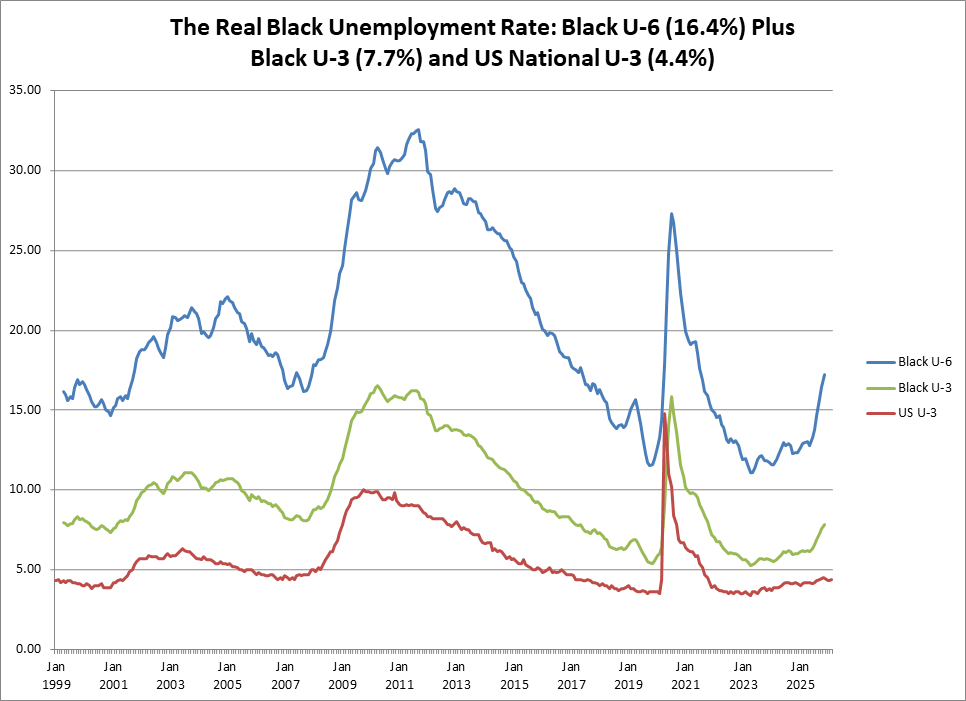
The “Real” black unemployment rate, as calculated by BlackEconomics.com, was stable at 16.4%.
During Trump’s presidency, there has been a slight loss of jobs, -426,000, out of total US national employment of 162 million people. It is the first year of net job loss for a president without a recession or COVID.
The economy lost jobs in two normally resilient sectors: healthcare and hospitality. Healthcare lost -18,600 jobs while hospitality shed -27,000 positions. Job losses were widespread, hitting construction (-11K), manufacturing(-12K), and Information Technology(-11K). Only financial services (+10K) add jobs.
The unemployment report shows that the US job market is stalled. The stock market was still at record highs (SP 500 Index = 6500). US GDP growth (0.7% annually) also stalled in the 4th quarter of 2020. Inflation was stable at 2.9%, many had expected an increase in the inflation rate given the current US tariff policy and the war with Iran. The Federal Reserve held interest rates steady at its January meeting. The current FOMC Fed Funds interest rate is 3.75%. However, mortgage interest spiked to 6.4%.
There was one small point of humor in the BLS employment situation report. Notably, in the press release, given the large job losses, the BLS described the job market as “edged down.” A clear nod to the current political environment.
Note: (K=1,000)
Economic Challenges
Economic policymakers face a new challenge: economic growth without new jobs. Black unemployment has always predicted recessions. Now, Black unemployment is predicting jobless growth. We have not faced an environment like this before in modern times. We have an economy that grows but does not create jobs.
Black unemployment always signals a problem for the larger economy. This time, it might be structural. The current labor market is dominated by uncertainty and technological change (AI). We are looking at a period of stagflation with little job growth. And the Federal Reserve (Monetary policy only) cannot do anything about a fiscal policy problem. Only Congress can address fiscal problems.
Black Employment Numbers
Black unemployment rose again in February, to 7.7%, continuing a medium-term trend of uncertainty in hiring and employment for Black people over the next 2-3 years. While the parts of the economy continue to grow, higher Black unemployment always presages a recession in the job market for the larger economy.
African Americans work in key industries, like warehousing and retail, that are highly sensitive to small changes in the economy. Black employment was also affected by government layoffs and retirements.
Monthly Black Employment was Flat
In February, the number of Black employees increased by 26,000: A 5,000 job increase for Black men over 20 years of age, while Black women (>20) increased by 106,000 workers. The numbers don’t sum because other groups, like African American teenagers, are included in the total.
The Black labor force participation rate (63%) was barely changed. However, it is important to note that the Black LFP and the white LFP are nearly identical. African American workers are willing to work at the same rate as white given the same opportunities and wages. Black workers have never been “lazy,” instead they respond to job market conditions like every other group.
The “Real” Black unemployment rate was computed to be 16.4%. The measure represents both the unemployed and the underemployed, but still unemployment in the eyes of the workers.
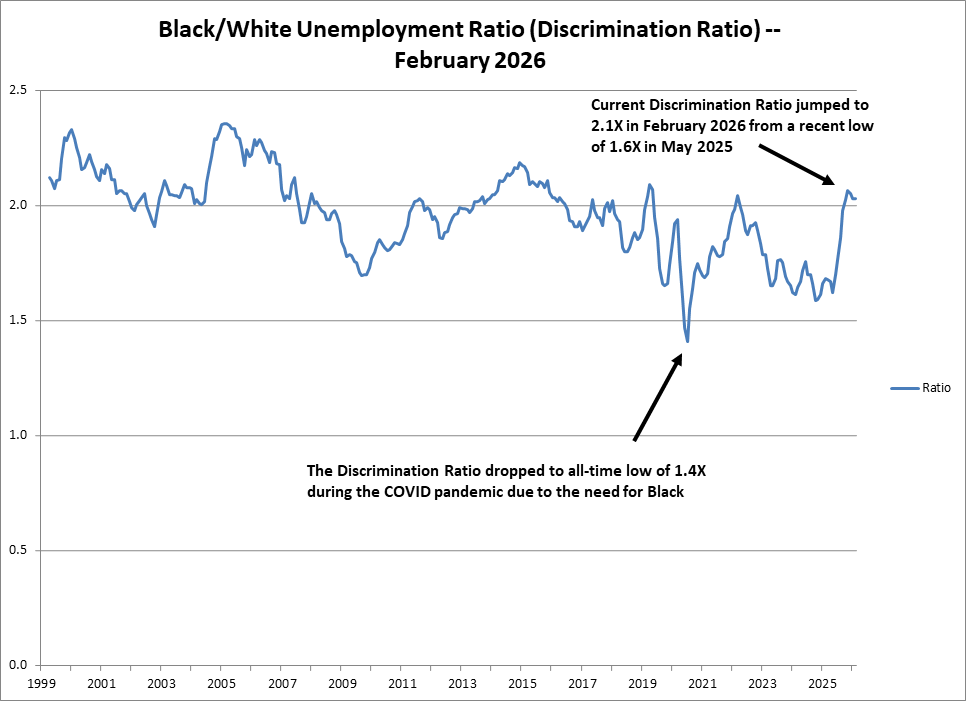
The Discrimination ratio, which is the number of unemployed Blacks compared to unemployed Whites, increased to 2.08X. Historically, the rate has been 2X or twice as high. During COVID, it dropped to a record low of 1.4X as employers struggled to find employees who would take “dangerous” jobs.
Establishment Data
Summary
The huge drop in African American male employment is a clear warning sign for the US economy. The negative growth of jobs for African Americans is a long-term problem that impacts income and wealth.